Showing posts with label Bishkek Kyrgyzstan. Show all posts

Sunday, July 31, 2016

Trading the Hyatt Hotel Pool for Wool Blankets and Taxidermy in Kyrgyzstan

Bishkek, Kyrgyzstan in the summer can get intense. Hazy, hot, and uncomfortably humid—these are the words that define the Kyrgyz capital during the warmer months.

Eventually, the pool scene at the Hyatt Regency Bishkek was getting a bit stale, so we decided to escape the city heat and head for the famed Tian Shan Mountains.

Back then, the Hyatt Bishkek employed a security guard who was a true jack-of-all-trades. If you wanted to organize any excursion beyond the city limits, he was the man who knew who to call. For a generous tip, he would handle the entire setup—soup to nuts.

Fast forward to our ride out: a passenger van rolling through the sparse Kyrgyz countryside. As we bumped along potholed dirt roads that teetered precariously on the edges of impossibly tall mountain passes, more than a few of us started reminiscing fondly about the safety of those lazy days back at the hotel pool.

The farther we traveled from Bishkek, the more traditional and nomadic the landscape became. Brick houses gave way to white felt yurts, and livestock roamed freely across open fields, completely unbothered by fences.

Finally, we reached our destination: 12 Chimneys (or maybe it was 7 Chimneys, or 5—the exact count didn't really matter once we arrived).

Up in the high altitudes of the Tian Shan range, the mountain air was impossibly crisp, and the rushing streams ran so clear they looked good enough to drink straight from the source. The shift in temperature was dramatic. 

Before long, we were sipping cold local Kyrgyz beers while wrapped in heavy wool blankets to stave off the sudden mountain chill—all while surrounded by an eclectic indoor collection of local taxidermy.

This corner of Central Asia has remained largely unchanged through the centuries. The Kyrgyz people have always been exceptional stewards of their wild, rugged landscapes. If you ever get the chance, pay them a visit—just make sure to head for the mountains.

Saturday, July 16, 2016

From the Steppes to the USSR: Exploring Kyrgyzstan’s Complex History in Bishkek


Below is a video walkthrough of the State Historical Museum in Bishkek, Kyrgyzstan. I shot this footage after touring the collection, an experience I would highly recommend to anyone spending time in the Kyrgyz capital.

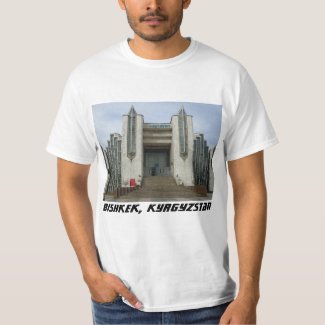
Before even stepping inside, I was struck by the monumental scale of the building itself. Completed in 1984, the museum is a textbook example of late Soviet Modernist and Brutalist architecture—a style widely embraced by both the Soviet Union and the United States during the Cold War era for its raw efficiency and imposing physical presence.

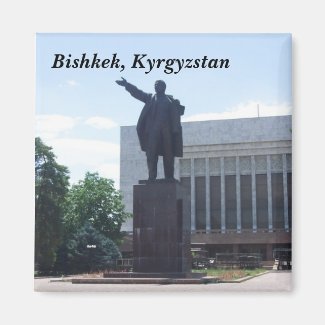
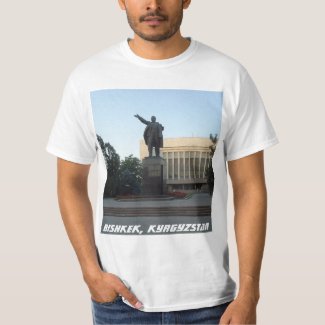
The museum commands a prime position on Ala-Too Square, set amidst white marble, sweeping fountains, and manicured gardens. Honor guards stand watch at the nearby flag post, while a larger-than-life bronze statue of Vladimir Lenin looms behind the building.

Approaching the entrance, the sheer size of the structure makes you feel remarkably small. After heaving open the massive front door, I made my way to the ticket desk. As is common across much of the region, foreign visitors pay a slightly higher admission fee than local citizens, but it remains an absolute bargain for the amount of history packed inside.

A significant portion of the museum’s upper floor is dedicated to the Soviet era, tracing the rise of the USSR, regional revolutionary movements, and the triumphs of the Decembrists. In one room, the flags of the former Soviet Republics still hang side-by-side.

Kyrgyzstan’s integration into the Soviet Union brought swift modernization to this corner of Central Asia. Infrastructure expanded dramatically, establishing direct railway links from Bishkek to Moscow and creating a sizable ethnic Russian community that still calls the country home.

Yet, while the museum pays ample tribute to its 20th-century Soviet past, the much deeper history of the Kyrgyz people takes center stage. The lower levels feature full-scale felt yurts, traditional weaponry, intricate leatherwork, and silver crafts that offer a window into centuries of nomadic life.

As an American, learning about the traditional lifestyle of the nomadic Kyrgyz tribes felt strikingly familiar. Their deep connection to the land, seasonal migrations, and tribal structures share remarkable parallels with the cultures of Native American nations like the Wampanoag and Narragansett back home in New England.

With Kyrgyzstan rapidly growing in popularity among international travelers, the State Historical Museum is bound to see more global traffic. If you don't read Kyrgyz or Russian, hiring a local guide is well worth the investment, as many of the static displays and informational panels lack English translations.

Tuesday, July 15, 2014

Smooth Sailing to Bishkek: Navigating Istanbul, Transit, and Visa-on-Arrival at Manas Airport

Last month, I took my seventh trip to Bishkek, Kyrgyzstan. I hadn't visited the country in a few years, and I’m pleased to report that the immigration and customs process was smoother than ever.

There are no direct flights to Kyrgyzstan from the United States. Most Americans reach the country by transiting through the hubs of Aeroflot, BMI, or Turkish Airlines. I chose Turkish Airlines since I’m familiar with Atatürk Airport in Istanbul and hold Star Alliance Gold status. Flying out of JFK, I had a five-hour layover in Istanbul ahead of my connecting flight.

Turkish Airlines has really come a long way in terms of service and amenities. Their fleet is modern, and the overall onboard experience—from service to dining—is comparable to Western Europe's top carriers. Once on the ground in Istanbul, I made my way to the Turkish Airlines lounge, which turned out to be the finest Star Alliance lounge I’ve ever visited. 

The entrance opened into a game room with a large pool table and shelves stocked with art and coffee table books. Further inside, the main space offered seating for every type of traveler, from plush armchairs and sofas to café-style tables, all set to the backdrop of a self-playing piano. Hot food was cooked to order alongside several fully stocked bar stations, while flat-screen TVs broadcasted international news next to racks of global newspapers.

After unwinding for a few hours, I headed toward the gate area, where a sudden wave of anxiety set in. A Turkish Airlines agent announced she would be checking passports and entry visas before boarding. Although travelers can secure a visa ahead of time at the Kyrgyz consulate in New York, my recent travel schedule hadn't allowed me to leave my passport overnight. Fortunately, Kyrgyzstan allows citizens from the U.S. and most Western European nations to purchase a visa upon arrival at Manas International Airport.

When I reached the gate agent and mentioned my plan to obtain a visa on arrival, she gave me a bewildered look.

"Good luck with that," she said, quickly typing a message on her phone.

"What do you mean?" I replied. "The Kyrgyz consulate website explicitly states that U.S. citizens can get a visa at Manas Airport."

"Fine," she huffed, dismissively sliding my passport back across the counter.

Puzzled by the exchange, I boarded anyway. I had never encountered issues entering Kyrgyzstan on previous trips, though this was my first time opting to buy the visa at the airport rather than securing it in advance.

The flight to Bishkek was populated mostly by Kyrgyz citizens returning from shopping trips in Istanbul, a handful of American service members heading to Manas Air Base, and a group of Dutch travelers bound for a hunting expedition in the backwoods. I slept for most of the red-eye flight until a rough touchdown jolted me awake. Landings in Bishkek are notoriously bumpy due to the coarse pavement of the runway.

Stepping off the plane, three Kyrgyz police officers stood watch, eyeing passengers as they disembarked. Although officers have always been courteous to me, their tall, Soviet-style caps give them an imposing presence. Moving into the immigration hall, I was relieved to see the visa window open and staffed—a major point of uncertainty during the flight, given our 3:00 AM arrival time.

I filled out a basic application form, handed it through the glass with my passport, and was shocked when the officer returned it approved in under three minutes. After paying the $70 fee, I moved directly to the passport control booth. The immigration officer reviewed the new visa, flipped through the existing stamps in my passport, and seemed curious about my travel history, though limited English kept the exchange brief. 

He stamped the entry page and handed my passport back without issue. While I have never personally run into trouble at Manas, I know fellow travelers who have faced extra scrutiny—hurdles that are often cleared with informal "additional payments." That lingering inconsistency remains a common concern for people visiting the country.

After clearing immigration, I followed the corridor toward baggage retrieval, where a airline agent was verifying barcoded baggage claim stickers against boarding passes. At JFK, the check-in agent had affixed my bag tag receipt to the stub of my JFK–IST ticket. After digging through my pockets and carry-on, I managed to pull it out, though it made me wonder what happens to travelers who accidentally discard theirs.

Just past baggage collection, a customs official was directing select passengers toward an X-ray scanner. He pointed to my small carry-on bag, which I ran through the belt without issue. A walk-through metal detector was set up nearby, though officers weren't requiring travelers to remove jackets or belt buckles.

With customs behind me, I stepped out into the main arrival hall to the usual chorus of taxi drivers shouting for fares. Maintaining a steady pace to look like a local, I scanned the crowd through the sea of passengers, drivers, and security personnel. A minute later, my friend emerged from the crowd. My seventh trip to Bishkek was officially underway.


Sunday, June 10, 2012

I’ve Visited Bishkek 20 Times—Here Is My Favorite Thing About It

Someone just asked me what I enjoy most about traveling to Kyrgyzstan.

That’s a tough question because it’s so open-ended!

But after visiting Bishkek nearly 20 times over the last five years, my answer is clear:

I love the parks. 🌳

It might sound random, but Bishkek’s parks are unlike anywhere else I’ve been.

First, the trees are massive. They’re easily a century old and tower over everything, keeping the city cool on hot summer days.

Second, the life in them is incredible. In many US parks, you mostly see empty lawns. Bishkek’s parks are bursting with energy! You see kids playing, couples walking hand-in-hand, and grandparents sharing ice cream.

Even though they haven’t been fully maintained since Soviet times, that’s part of their rustic charm. Fountains leak and monuments crumble, but people are always smiling.

Between the fresh air, bird song, and happy energy, they are the ultimate city refuge. ✨


Friday, June 8, 2012

An American Salute for a Soviet WWII Veteran in Kyrgyzstan

A distinguished Kyrgyz man, a World War II veteran with several medals pinned to his suit jacket, stands proudly in a park in Bishkek, Kyrgyzstan.
A moment of deep respect and gratitude for the sacrifice and service of this Kyrgyz Red Army veteran.

I was at a Memorial Day celebration in Boston last month when I noticed a group of World War II Navy veterans hanging out together.

They were all in remarkably good health, laughing and swapping stories about life aboard their ship amidst the chaos of war. Proud of their service, each wore an identical navy blue hat embroidered with "USS Massachusetts."

That sight immediately brought back a memory from a trip to Bishkek, Kyrgyzstan, the year before.

While walking through one of Bishkek’s lush parks, I crossed paths with a Soviet Red Army veteran. Judging by his appearance, he was an ethnic Kyrgyz man who had served when Kyrgyzstan was still a Soviet Republic. He looked to be in his late 80s or early 90s.

He made a striking impression: a charcoal gray suit, white sneakers, and a top hat. Though the suit hung a bit baggy on his aging frame, he looked exceptionally distinguished. What truly caught my eye, however, was the array of Soviet service medals pinned across his chest.

Fascinated, I walked over to introduce myself.

Although he likely spoke Kyrgyz in addition to Russian, we didn't share a common language. Fortunately, he was with his son—a man in his 40s who spoke a bit of English and acted as our translator.

The old veteran was delighted to explain what his decorations meant and happily posed for a photo. One medal featured Lenin’s profile, suggesting he may have been a war hero and highly decorated officer.

At first, he assumed I was British. But when I mentioned I was American, his eyes lit up. I realized I was likely the first American he had spoken to in decades.

Before parting ways, we shared a warm handshake, and I gave him a respectful salute for good measure.

Standing in Massachusetts watching those Navy veterans, my mind drifted back to that park in Bishkek. I couldn't help but wonder what would happen if those old allies from different corners of the globe could sit down together. What stories would they trade?

Judging by the warmth I received in Kyrgyzstan, I know he would have loved sharing his war experiences with American veterans.

As a 30-year-old carrying no emotional weight from World War II or the Cold War, I would have given anything to sit in on that conversation. Would there be tension? Debate? Laughter? A shared toast?

We can only imagine—but the thought alone made my day.

Monday, June 4, 2012

Kyrgyzstan Visa on Arrival: What Happened When I Landed in Bishkek

Since my last post, I got a message asking about visa procedures for entering Kyrgyzstan. I’m glad somebody asked, because I went through plenty of needless uncertainty on my trip as well.

Here’s the bottom line: If you're a citizen of the United States or most of Western Europe, you can purchase a visa on arrival at Manas Airport. You don’t need to visit the consulate ahead of time.

The Airport Drama

My last visit to Bishkek was in November, transiting through Istanbul on Turkish Airlines. While boarding the flight, a representative checked passports and visas.

Since another American and I hadn't pre-purchased visas at a consulate, the representative looked shocked and worried we wouldn't be allowed into the country. After trying to explain that we planned to buy our visas at Manas, she made a quick phone call. Following some back-and-forth, she finally let us board.

Needless to say, this made me a bit nervous. Kyrgyz immigration agents don’t have the most stellar reputation for honesty, and I worried they might try to exploit the situation.

Smooth Sailing at Manas

Fortunately, I was stressing over nothing. The immigration procedure itself was surprisingly smooth.

I walked up to the visa desk, handed over my passport, and received a short form to fill out. Once finished, the official barely glanced at it—she didn't even seem to care what I had written.

I paid the fee in US dollars and moved on to the main immigration officer. He was a bit theatrical, holding my passport photo right next to my face for a dramatic comparison. After a solid 45 seconds of staring, he stamped my passport.

After picking up my baggage, customs agents randomly selected one bag for the X-ray machine. They didn't bother searching it, and I was officially on my way. Let the vacation begin!

Official State Department Guidelines

Here is the exact language regarding tourist visas for Kyrgyzstan, according to the U.S. State Department (remember to check current updates directly with the source):

“ENTRY / EXIT REQUIREMENTS FOR U.S. CITIZENS: A passport and a visa are required. U.S. citizens can obtain a one-month single-entry, non-extendable tourist visa upon arrival at the Manas International Airport outside Bishkek for a fee of $80 without invitation or sponsorship. If purchasing a visa at the airport, at least one blank passport page is required. Travelers cannot obtain tourist visas at land borders or regional airports.”

— U.S. State Department

Saturday, May 26, 2012

What It’s Like Flying Out of Bishkek: Manas Airport Runway & Flight Review

I was recently on a flight from Bishkek, Kyrgyzstan to Istanbul, Turkey, and recorded the takeoff to share on YouTube.

To my surprise, it has quickly become my most popular video!

The very first thing you notice when taking off or landing at Manas International Airport (FRU) is the intense, rough condition of the runway. It’s genuinely brutal!

If you tried rolling a marble down the runway at Manas, it would barely make it two feet before dropping into a deep rut or crack.

Overall, civil aviation activity at the airport feels pretty quiet. Most of the action comes from the US Military presence at the adjacent Manas Transit Center, where massive C-17 cargo planes and KC-135 refueling tankers sit parked on the tarmac. You can spot a few of them in the background of the video.

I flew into Bishkek with Turkish Airlines, though I know British Midland International (BMI) and Aeroflot also operate routes here. Flight options into Central Asia remain fairly limited, often running just a few times a week depending on the carrier.

Despite the sparse schedule and modest facilities, I was pleasantly surprised to find a Star Alliance Gold lounge—operated in connection with BMI. While the airport itself is simple and far from extravagant, having a quiet space to wait before boarding made a huge difference.

Check out the full video below to see the taxi sequence and experience just how bumpy that Manas runway really is!