Tuesday, July 15, 2014

Inside Moldova: Unpacking Europe’s Economic Outlier

Europe often evokes romantic imagery of Buckingham Palace, the Champs-Élysées, or posh ski resorts in Switzerland and Austria. The other day, I was thinking about how limited many people are when they picture Europe—limited in the sense that they only envision "Old Europe."

There are, of course, many countries on the continent characterized as emerging markets, most notably those in the Balkans and former communist states of Eastern Europe. While poverty, corruption, and crime are often rife, these nations are still very much a part of Europe.

That got me wondering: What is the poorest country in Europe? I thought it would be interesting to do a bit of research and uncover what has held this country back compared to its neighbors. Was it economic mismanagement, war, or something else entirely? Here is what I discovered.

The answer, perhaps not so surprisingly, is the Republic of Moldova. Moldova has a per capita GDP of $3,400. That is strikingly lower than its closest European competitors: Kosovo ($6,400), Ukraine ($7,200), and Bosnia and Herzegovina ($8,200).

A major factor in Moldova's dire economic situation is its geopolitical isolation. Moldova is not a member of the European Union, the Eurozone, or NATO. Although it borders Romania, Moldovans cannot travel to EU countries without a visa.

Economically, Moldova lacks significant natural resources and relies heavily on agriculture for exports. The country remains torn between East and West, with its trading partners split between Western Europe and nations like Russia, Ukraine, Belarus, and Kazakhstan. Although Moldova is making some progress toward EU integration, full membership remains a long way off.

Adding to its struggles, Moldova faces internal political instability due to a breakaway region supported by Russia. Known as the Republic of Transnistria, this area is home to a predominantly Slavic population and has operated independently from Moldova since the fall of the Soviet Union.

Looking ahead, Moldova stands to benefit if the global economy grows, largely due to foreign remittances sent home by Moldovans working in Russia and other parts of Europe. Further European integration could also boost the economy through increased exports and access to EU-sponsored loans. However, Moldova must eventually find a way to ease tensions with Transnistria to reassure foreign investors.

Until then, keep enjoying fine Moldovan wine—unquestionably one of the country's most appreciated exports!

The Top 5 Richest Countries in the World by GDP Per Capita

The richest countries in the world are a remarkably diverse group. While some nations have built their immense wealth on vast reserves of oil and natural gas, others have achieved prosperity through global trade, international banking, and specialized services.

Understanding the Metrics

To measure a nation's standard of living, economists rely on Per Capita Gross Domestic Product (GDP). Gross Domestic Product represents the total monetary value of all goods and services produced within a country's borders in a single year. To calculate per capita GDP, this figure is divided by the country's total population.

While GDP per capita does not account for wealth inequality within a population, it remains one of the clearest indicators of overall economic power relative to population size. All figures below are based on estimates from the CIA World Factbook.

The World’s 5 Richest Countries by GDP Per Capita

1. Qatar — $179,000 Qatar holds the title of the richest nation on Earth, a status driven almost entirely by its colossal oil and natural gas reserves. Since the initial discovery of petroleum in the mid-1940s, the small Gulf state has transformed its economy, vastly improving infrastructure and the overall standard of living for its citizens. Although heavy reliance on fossil fuels leaves state revenues vulnerable to energy market fluctuations, Qatar has been aggressively pursuing economic diversification through major global investments and tourism initiatives.

2. Liechtenstein — $141,000 Nestled between Switzerland and Austria, Liechtenstein is a microstate with a population of just 35,000 people. Despite its size, it boasts an extraordinarily strong economy driven by low corporate tax rates, streamlined incorporation rules, and a business-friendly environment. Beyond its prominent financial services sector, Liechtenstein supports a high-tech manufacturing industry—particularly in precision instruments and dental products—keeping its national unemployment rate at a remarkably low 1.5%.

3. Luxembourg — $82,000 Luxembourg is a powerhouse of international finance, serving as one of Europe's top private banking and insurance hubs. As a founding member of the European Union, it leverages its central location and favorable tax structures to attract global corporations looking to minimize tax liabilities. Unlike traditional microstates, Luxembourg blends its massive financial sector with robust steel manufacturing and growing tech industries, making it a critical hub for global commerce.

4. Bermuda — $69,900 Though world-famous for its pristine beaches and resort tourism, Bermuda owes the bulk of its economic success to offshore finance and reinsurance. International firms are drawn to the island's low tax obligations and business-friendly regulatory framework. In addition to hosting around 500,000 tourists annually, Bermuda maintains strong financial ties with the United States; while its currency displays Queen Elizabeth II, the Bermudian dollar is pegged 1-to-1 with the U.S. Dollar.

5. Singapore — $62,100 Proportionally, Singapore boasts one of the highest concentrations of millionaires on the planet. The island state features a highly diversified, free-market economy anchored by maritime trade, oil refining, advanced manufacturing, and wealth management. Widely recognized for its efficient, low-corruption government and political stability, Singapore has consistently expanded its global economic footprint while rapidly developing into a world-class tourism and tech hub.

Smooth Sailing to Bishkek: Navigating Istanbul, Transit, and Visa-on-Arrival at Manas Airport

Last month, I took my seventh trip to Bishkek, Kyrgyzstan. I hadn't visited the country in a few years, and I’m pleased to report that the immigration and customs process was smoother than ever.

There are no direct flights to Kyrgyzstan from the United States. Most Americans reach the country by transiting through the hubs of Aeroflot, BMI, or Turkish Airlines. I chose Turkish Airlines since I’m familiar with Atatürk Airport in Istanbul and hold Star Alliance Gold status. Flying out of JFK, I had a five-hour layover in Istanbul ahead of my connecting flight.

Turkish Airlines has really come a long way in terms of service and amenities. Their fleet is modern, and the overall onboard experience—from service to dining—is comparable to Western Europe's top carriers. Once on the ground in Istanbul, I made my way to the Turkish Airlines lounge, which turned out to be the finest Star Alliance lounge I’ve ever visited. 

The entrance opened into a game room with a large pool table and shelves stocked with art and coffee table books. Further inside, the main space offered seating for every type of traveler, from plush armchairs and sofas to café-style tables, all set to the backdrop of a self-playing piano. Hot food was cooked to order alongside several fully stocked bar stations, while flat-screen TVs broadcasted international news next to racks of global newspapers.

After unwinding for a few hours, I headed toward the gate area, where a sudden wave of anxiety set in. A Turkish Airlines agent announced she would be checking passports and entry visas before boarding. Although travelers can secure a visa ahead of time at the Kyrgyz consulate in New York, my recent travel schedule hadn't allowed me to leave my passport overnight. Fortunately, Kyrgyzstan allows citizens from the U.S. and most Western European nations to purchase a visa upon arrival at Manas International Airport.

When I reached the gate agent and mentioned my plan to obtain a visa on arrival, she gave me a bewildered look.

"Good luck with that," she said, quickly typing a message on her phone.

"What do you mean?" I replied. "The Kyrgyz consulate website explicitly states that U.S. citizens can get a visa at Manas Airport."

"Fine," she huffed, dismissively sliding my passport back across the counter.

Puzzled by the exchange, I boarded anyway. I had never encountered issues entering Kyrgyzstan on previous trips, though this was my first time opting to buy the visa at the airport rather than securing it in advance.

The flight to Bishkek was populated mostly by Kyrgyz citizens returning from shopping trips in Istanbul, a handful of American service members heading to Manas Air Base, and a group of Dutch travelers bound for a hunting expedition in the backwoods. I slept for most of the red-eye flight until a rough touchdown jolted me awake. Landings in Bishkek are notoriously bumpy due to the coarse pavement of the runway.

Stepping off the plane, three Kyrgyz police officers stood watch, eyeing passengers as they disembarked. Although officers have always been courteous to me, their tall, Soviet-style caps give them an imposing presence. Moving into the immigration hall, I was relieved to see the visa window open and staffed—a major point of uncertainty during the flight, given our 3:00 AM arrival time.

I filled out a basic application form, handed it through the glass with my passport, and was shocked when the officer returned it approved in under three minutes. After paying the $70 fee, I moved directly to the passport control booth. The immigration officer reviewed the new visa, flipped through the existing stamps in my passport, and seemed curious about my travel history, though limited English kept the exchange brief. 

He stamped the entry page and handed my passport back without issue. While I have never personally run into trouble at Manas, I know fellow travelers who have faced extra scrutiny—hurdles that are often cleared with informal "additional payments." That lingering inconsistency remains a common concern for people visiting the country.

After clearing immigration, I followed the corridor toward baggage retrieval, where a airline agent was verifying barcoded baggage claim stickers against boarding passes. At JFK, the check-in agent had affixed my bag tag receipt to the stub of my JFK–IST ticket. After digging through my pockets and carry-on, I managed to pull it out, though it made me wonder what happens to travelers who accidentally discard theirs.

Just past baggage collection, a customs official was directing select passengers toward an X-ray scanner. He pointed to my small carry-on bag, which I ran through the belt without issue. A walk-through metal detector was set up nearby, though officers weren't requiring travelers to remove jackets or belt buckles.

With customs behind me, I stepped out into the main arrival hall to the usual chorus of taxi drivers shouting for fares. Maintaining a steady pace to look like a local, I scanned the crowd through the sea of passengers, drivers, and security personnel. A minute later, my friend emerged from the crowd. My seventh trip to Bishkek was officially underway.

The Soviet "House of Happiness" Hidden in Bishkek

Sitting in a posh coffee shop in Bishkek's University neighborhood, my Kyrgyz friend and I were suddenly interrupted by a parade of shiny Mercedes-Benzes speeding through traffic, all mercilessly laying on their horns.

"Is that the President's motorcade?" I naively asked.

She flatly responded, "No, it's a wedding," as if I were born yesterday.

As I sat there looking confused, she went on to tell me that Kyrgyz weddings were raucous affairs involving plenty of alcohol and legendary late-night parties. It felt like a paradox—certainly not what I had in mind for a Central Asian nation that seemed so disconnected from Western boozebag culture.

"My brother's wedding was the same," she added, "although we rented an American stretch limo when we left the House of Happiness."

I almost spit out my coffee. "The House of Happiness? Are you joking?"

Only seconds later, I felt bad for letting my reaction get the best of me, but something about the phrase struck me as hilarious. In my mind, the name sounded like a cross between a horror movie and a Disney World attraction.

She proceeded to explain that the House of Happiness was a non-denominational, church-like structure used for civil ceremonies. As the Soviet Union worked to marginalize organized religion, the state built these improvised cathedrals to function as secular wedding halls.

"Take me there. I have to see the House of Happiness!" I blurted out.

To my delight, she responded, "It's only a 10-minute walk. We can go."

If you love to walk, Bishkek is a wonderful city to hit the pavement. It reminds me of New York because of its constantly bustling street scene. Even at 2 AM, people are hanging out, shooting the breeze, and patronizing the many newsstands selling cigarettes, soda, and snacks. While this walkability is partly a symptom of an economy where many people cannot afford cars, there is something comforting about being constantly surrounded by life. Just throw on a fur jacket, pull on some warm boots, and you’ll blend right in.

My excitement grew with every block. Finally, just past Bishkek's quirky Circus building, a concrete-and-glass behemoth emerged from the drab surroundings. It was everything I had expected and more. All I could do was stare in amazement, trying to make sense of it. The Crystal Cathedral came to mind, mixed with the Fashion Institute of Technology campus in New York. Put them together, and you get the House of Happiness. Unique? Ugly? Modernist? Who knew? Somehow, the strange fusion worked, and I loved it.

The building was clearly showing its age—several windows were shattered, and the stonework was crumbling—but I still felt a surge of euphoria as my friend and I walked arm-in-arm up the steps.

We opened the heavy doors to find an elderly Russian man sitting at a check-in desk, preparing the hall for ceremonies scheduled later that day. My friend asked if we could take some pictures.

"Only in the lobby," he answered in Russian.

The lobby featured a massive, vaulted ceiling framed by cold marble walls. Roped off in the center was a runner leading toward the primary ceremony hall.

"Please, ask if we can just step inside the main hall," I begged my friend.

She relayed the request, but the old man held firm. "Only the beautiful lady in white is allowed to walk on that carpet."

Feeling slightly shafted, we could only peer in from the threshold. A vast, round stained-glass window immediately caught my eye, filtering the sunlight into warm rays that made the grand arched structure feel surprisingly comforting. Even though the venue was never a place of worship, it possessed a distinct, almost spiritual presence. Despite the wear and tear, I was thrilled to see it still active and serving its original purpose.

As we stepped back outside, my friend asked a few locals to snap a photo of us on the grand staircase. They happily obliged, likely assuming we were contemplating our own wedding at the House of Happiness.

Back at the hotel, I immediately jumped online to research the background of this extraordinary building. It turned out my friend’s translation was slightly informal; the structure is officially known as a Soviet "Wedding Palace." The USSR began constructing these across its territories in the late 1950s, commissioning bold, modernist designs for each republic. I discovered that an oligarch had even bought the former Wedding Palace in Tbilisi, Georgia, to use as his personal mansion!

While many of these Soviet-era monuments have fallen into disrepair or face stiff competition from traditional religious institutions, Bishkek’s Wedding Palace remains open to the public—a vibrant, lingering relic of a bygone era that I hope stays preserved for generations to come.

Coffee, Cardboard, and the 99%: A Walk Through Occupy Wall Street

The line at the Starbucks on 30 Park Row in Lower Manhattan was filled with the usual characters last Wednesday morning. Investment bankers, bond traders, and corporate titans flipped through pages of The Wall Street Journal while awaiting their morning Frappuccinos. It was just another typical day in Downtown New York, despite the Occupy Wall Street protests unfolding mere blocks away.

A short walk to the park revealed a circus of activity. Mobs of reporters and television cameras peered down at a small core of camped-out protesters, while an even larger crowd of tourists shuffled past, gawking and chuckling at the homemade signs and grimy sleeping setups.

Although Occupy Wall Street prides itself on a leaderless structure, the movement has effectively become a smorgasbord of individual causes. Playing to the cameras above, one man held a sign reading "STOP FRACKING." Only feet away, a small group unrolled a long banner blaring "HOW ABOUT WE START REPARATIONS?" The Communist Party of America was on the scene distributing literature, joined by members of various labor unions offering financial support to the demonstrators.

Nearby, several protesters lay on the ground surrounded by oversized packs of Crayola markers. Still half-wrapped in their sleeping bags, they spent the afternoon crafting more makeshift signs out of flattened cardboard boxes. Yet for all the signs on display, their messages were broad and disconnected. The movement's ambiguous philosophy has kept it from speaking with a unified voice; the overarching theme of "We are the 99%" was lost in a menagerie of unrelated demands.

Despite this disorganization, donations continue to pour into Zuccotti Park, and the fledgling movement is growing by leaps and bounds thanks to round-the-clock media coverage. For now, the New York City Police Department is keeping a watchful eye, seemingly reluctant to forcibly remove peaceful demonstrators. And while Mayor Michael Bloomberg has expressed sympathy for some of the group's grievances, he also recognizes that the occupiers are wearing out their welcome with local residents.

In the end, it may be Mother Nature—and the looming cold weather—that gets the final say.

Monday, July 14, 2014

Beyond Tourism: The Energy Engine of Trinidad and Tobago

Visions of palm trees and sun-soaked beaches usually come to mind when people think of Trinidad and Tobago. But while the twin-island nation is certainly known for its tourism, it is also a quiet powerhouse in oil and natural gas production.

According to the CIA World Factbook, Trinidad and Tobago ranks 45th in global oil production—placing it right between Germany and Italy. The small nation produces roughly 151,600 barrels of oil per day, drawing from an estimated 728.3 million barrels of proven reserves.

While crude oil production has been declining since the early 1980s, massive natural gas discoveries have reinvigorated the energy sector. Thanks to the expansion of Liquefied Natural Gas (LNG) technology, natural gas can now be cheaply and easily shipped to major consumer markets nearby. In 2010, Trinidad and Tobago exported 20.41 billion cubic meters of natural gas, making it the 11th largest exporter in the world.

Together, oil and natural gas account for 40% of the country's GDP and 80% of its total exports. Yet this boom comes with a classic economic paradox: despite generating the vast majority of national revenue, the capital-intensive energy sector employs only 5% of the workforce.

Mindful of this imbalance, Trinidad and Tobago has worked hard to avoid the "oil curse" that plagues many resource-rich nations. Government officials have actively focused on diversifying the economy to ensure long-term stability for when non-renewable resources eventually run out.

So far, that forward-looking strategy appears to be paying off. Trinidad and Tobago enjoys a strong reputation among multinational corporations and maintains a welcoming environment for foreign investment. With an estimated per capita GDP of $21,200, it stands as a solidly middle-income nation and one of the most prosperous economies in Latin America and the Caribbean.

Move Over, Williamsburg: America’s New Hipster Capital

While New York's Williamsburg neighborhood is universally regarded as the hipster capital of the world, New York actually placed second in a recent statewide ranking.

Minnesota edged out the Empire State to take the top spot as "The Most Hipster State in the US," according to a recent BuzzFeed ranking.

What Makes a 2014 Hipster?

For the uninitiated, hipsters are generally described as 20-something nonconformists. They are best known for wearing skinny jeans, oversized sweaters, retro denim jackets, and vintage accessories plucked straight from the local thrift store.

They tend to congregate in gentrifying urban spaces anchored by independent coffee shops, craft breweries, thriving indie art scenes, and progressive politics.

While most major Northeastern cities have an established hipster stronghold, the subculture has spent the last few years expanding into liberal pockets across the Heartland.

The Search Data Behind the Ranking

Despite acknowledging Williamsburg as the undeniable epicenter of the movement, BuzzFeed awarded Minnesota the top spot based on search engine metrics. Specifically, it came down to the sheer concentration of hipster-related queries originating from the state.

Minnesotans were routinely searching for terms like:

  • "hipster look"

  • "hipster girl"

  • "urban hipster"

Because Minnesota has roughly a third of New York’s total population, its search interest is far more concentrated. In other words, Minnesota boasts a higher per capita hipster density than New York.

Driven by Minneapolis's thriving art scene, bike-friendly culture, and neighborhoods like Uptown and Northeast, these rankings fly in the face of the long-held assumption that hipster subculture is purely a coastal phenomenon.

The Lazy Investor’s Guide to Beating Wall Street

Thanks to financial networks like CNBC, many people are convinced that making money in the stock market should be left strictly to Wall Street professionals.

On any given day, talking heads and self-proclaimed "expert" guests toss around arbitrary numbers, market predictions, and jargon with total impunity.

But don't be fooled. Just because they talk in circles doesn't mean they are successful investors.

More often than not, their short-term predictions are flat-out wrong.

The average investor doesn't need cable news commentators, daily market forecasts, or hot stock tips.

Instead, following these four straightforward rules can help simplify your strategy—all while delivering long-term returns that beat the vast majority of actively managed mutual funds and stockbrokers.

1. Keep It Simple

Contrary to popular belief, you don’t need a chaotic mix of dozens of individual stocks and actively managed funds to build a properly diversified portfolio.

In fact, just a handful of low-cost index ETFs will instantly give you exposure to the entire global economy.

A classic, simple three-fund portfolio looks something like this:

  • Vanguard Total Bond Market ETF (BND) – For stability and income

  • Vanguard Total Stock Market ETF (VTI) – For overall U.S. market growth

  • Vanguard FTSE All-World ex-US ETF (VEU) – For broad international exposure

2. Keep It Cheap

When building your portfolio, index-based ETFs are an individual investor's best friend.

Because index funds simply track broad swaths of the market—like the S&P 500 or the Dow Jones Industrial Average—they don't require expensive fund managers.

Fund providers like Vanguard, Schwab, and Fidelity offer some of the lowest expense ratios in the industry. For example, Vanguard's VTI carries an ultra-low expense ratio of just 0.07% (7 basis points).

Compare that to the average actively managed mutual fund, which often charges well over 1.00% in annual fees while consistently underperforming the market over time.

3. Invest on a Regular Schedule

Consistently putting money into the market—often called dollar-cost averaging—removes destructive emotions like fear and greed from your investment strategy.

By investing a fixed dollar amount at regular intervals (such as every month), you naturally buy more shares when prices are cheap and fewer shares when prices are high.

It takes the guesswork out of building wealth, giving you zero reason to tune into daily market updates or buy investment magazines.

4. Rebalance Once a Year

Depending on your age, risk tolerance, and personal financial goals, you'll want a specific blend of stocks and bonds.

A traditional rule of thumb suggests holding your age in bonds. For instance, a 60-year-old investor might target a allocation of 60% bonds and 40% stocks.

Over the course of a year, market swings will naturally shift those percentages out of alignment. Simply set a calendar reminder to rebalance your portfolio back to your target allocation once every 12 months.

Sunday, July 13, 2014

3 High-Yield Bond ETFs to Beat Near-Zero Bank Rates

With the stock market’s lingering volatility and prolonged low interest rates, many income-seeking investors are turning to fixed income for a reliable stream of cash flow.

The problem? Certificate of Deposit (CD) rates are dire, and traditional money market accounts are yielding practically zero.

So, what is an income investor to do?

If you are looking to squeeze more yield out of your cash without picking individual issues, passive bond ETFs offer an accessible solution. Here are three low-cost exchange-traded funds providing attractive yields in today's market:

1. SPDR Barclays Capital High Yield Bond ETF (JNK)

The cheeky ticker symbol says it all: this fund invests in "junk bonds," otherwise known as high-yield corporate debt.

While junk bonds carry a reputation for being erratic and speculative, holding them through a diversified fund helps cushion individual default risks while delivering a juicy yield.

JNK is passively managed, keeping its expense ratio at an affordable 0.40%—below the 0.47% category average. Its portfolio features debt from familiar corporate giants like Citigroup, AIG, Harrah’s, and Clear Channel Communications.

As of this writing, JNK boasts an impressive 10.8% yield. Keep in mind that a fat yield comes with added risk, mostly in the form of sharper price swings than you would typically expect from fixed income.

2. PowerShares Emerging Markets Sovereign Debt Portfolio (PCY)

For investors willing to look overseas, PCY tracks the Deutsche Bank Emerging Market USD Liquid Balanced Index, holding sovereign bonds issued by more than 20 developing nations.

The Philippines currently leads as the fund’s largest holding, with Mexico, Brazil, Colombia, and El Salvador rounding out the top five.

While emerging markets were historically viewed as default-prone, the ongoing European debt crisis in developed nations like Portugal, Ireland, Italy, Greece, and Spain (the "PIIGS") has turned conventional wisdom on its head.

PCY charges a modest 0.50% expense ratio—5 basis points cheaper than the category average—and offers a compelling 6.11% yield.

3. Vanguard Total Bond Market ETF (BND)

It isn't sexy, but BND is reliable, rock-solid, and dirt cheap.

Think of BND as the steady tortoise of fixed income: it plods along yielding a better-than-the-bank payout while steering clear of the wild, swashbuckling volatility seen in junk bonds or emerging market debt.

BND passively tracks the broad Barclays Capital U.S. Aggregate Float Adjusted Index, offering exposure to thousands of high-quality U.S. Treasuries, agency bonds, and investment-grade corporate debt.

Vanguard charges a miserly 0.12% expense ratio, making it one of the cheapest core bond funds available. With its top 10 holdings accounting for just ~11% of total assets, BND provides exceptional diversification along with a dependable 3.62% yield.


Saturday, July 12, 2014

From Lagos to Vladivostok: Building a Preppy Brand from Scratch

I'm certainly no fashion designer, but I've always admired their collective sense of creativity and freedom. On a whim, they can take a sudden epiphany and transform it into a reality—morphing an abstract concept into a photogenic look strutting down the catwalk.

Truthfully, the nitty-gritty of choosing fabrics, selecting patterns, and debating cuts bores me. It's the branding and cachet that certain labels manage to acquire that I find fascinating.

Only a small minority of shoppers actually follow high-fashion runway trends. The average consumer won't rush out to buy a designer's latest seasonal collection.

In reality, most of us are simply looking for a subtle nod to luxury—sporting an alligator, a horse, a sailboat, or another recognizable logo embroidered on our chest.

While a Polo Ralph Lauren shirt or Lacoste sneakers may outstrip their big-box store brethren in quality and craftsmanship, consumers are mostly paying for the brand identity, which is meant to convey status.

In my opinion, the difference in perceived quality is deeply drilled into our heads through a combination of hefty price tags and glossy ads in Vogue and Esquire.

The Search for Brand Identity

At one point in my life, I tried to "beat the system" by only buying unbranded clothing. Eventually, that morphed into hunting for name-brand apparel at thrift stores—a pastime I still enjoy.

While channel-surfing one evening, a documentary about Tommy Hilfiger caught my eye. Someone who worked closely with the brand noted that Hilfiger's aesthetic famously went "from preppy to gangster and back to preppy."

The public can be remarkably finicky, but the right publicity works wonders. A famous rapper wears a logo shirt to the Grammy Awards, and that snowball effect can propel an obscure brand into stardom in a matter of months.

That’s when it hit me: why not try to start my own clothing line and see if I can build some traction?

I didn't expect to become the next Yves Saint Laurent, but it sounded like a fun, creative learning experience.

Finding Inspiration in Unexpected Places

I wanted a logo or slogan that felt preppy, original, and played into an "international man of mystery" vibe. I bounced a few concepts around in my head, and then a past travel memory resurfaced.

A couple of years ago, I was traveling frequently to Lagos, Nigeria for work. While there, I was surprised to learn that the city had its very own yacht club—the Lagos Yacht Club.

I don't know why, but that struck me as extraordinary. I couldn't get over the fact that a chaotic West African metropolis where a large portion of the population lived in poverty was home to "the sport of billionaires."

It felt so distinct and out of place.

I wanted to buy a keepsake from the club—like a classic embroidered polo or t-shirt—but my hotel security guard warned that venturing out to the harbor on my own was too risky and local taxis weren't reliable.

I left Nigeria without a shirt, but the idea stayed with me.

The Birth of Vladivostok Yacht Club

That experience got the ball rolling. Soon, I was brainstorming "Yacht Club" concepts for unexpected or historically intriguing cities around the world.

  • Kuwait City Yacht Club?

  • Monrovia Yacht Club?

  • Muscat Yacht Club?

Finally, I settled on Vladivostok Yacht Club.

Although I have never been to Vladivostok, it has long been high on my travel wishlist. As a Russophile, I knew all about its history as the secure headquarters for the Soviet Navy’s Pacific Fleet—a naval tradition Russia continues today.

Its geography in the Far East is equally fascinating: nestled near the borders of China and North Korea, this remote outpost marks the far edge of Moscow’s long geographic reach.

Before moving forward, I did a quick Google search to make sure the name wasn't taken. To my surprise, Vladivostok actually has a thriving local sailing scene centered around the "Seven Feet Yacht Club."

However, the brand name "Vladivostok Yacht Club" was wide open.

Launching on Zazzle

With zero capital and a clear vision, I turned to Zazzle.com.

Using a print-on-demand platform meant I could design the shirt, order a prototype for myself, and avoid holding any physical inventory.

The design process was straightforward:

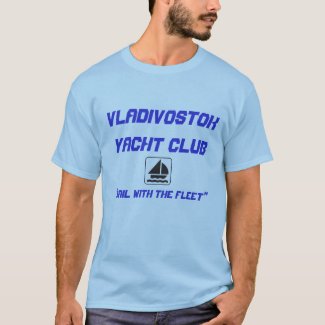
  1. I placed the bold text "Vladivostok Yacht Club" across the chest.

  2. Below it, I added the nautical tagline: "Sail with the fleet."

  3. I picked a sky-blue shirt with dark blue lettering in a classic font.

  4. I added a couple of public-domain maritime graphics to tie it together.

Next Steps and Guerrilla Marketing

After about a month on Zazzle, I made my first official sale!

I assume the buyer had some personal or travel connection to the Russian Far East. Little do they know, they just got in on the ground floor of a new apparel venture.

One sale is a encouraging start, but I want to build more momentum. My next phase involves testing out some classic guerrilla marketing tactics:

  • Location Marketing: Living in New York City gives me an advantage. I’m considering waking up early to stand in the crowd outside the Today Show set at Rockefeller Center while wearing the shirt.

  • Online Outreach: I plan to share the design across niche sailing forums, regional travel blogs, and Vladivostok interest groups on Facebook and MySpace.

  • Expanding the Line: Using Zazzle's setup, I've already expanded the Vladivostok Yacht Club brand onto coffee mugs, magnets, and keychains in just a few clicks.

Down the road, if momentum picks up, I might even register a dedicated domain like VladivostokYachtClubClothing.com.

Whether Vladivostok Yacht Club ever gets mentioned in the same breath as Lacoste, Vineyard Vines, or Paul & Shark remains to be seen. But for now, it's a fun experiment in modern branding!

How Boston Beer Company Built a $400M Craft Empire

Samuel Adams Boston Lager was the flagship brand that started it all for the Boston Beer Company.

Founded in 1984 by Jim Koch, the craft brewing pioneer named his signature recipe after American patriot Samuel Adams—a founding father who fought against the British Crown and played a key role in the Boston Tea Party.

Fittingly, the Boston Beer Company eventually inherited the crown as the largest American-owned brewer after giant Anheuser-Busch was acquired by European conglomerate InBev.

From Family Recipe to "Best Beer in America"

While the Harvard-educated Koch was always a gifted businessman, a few strokes of good timing helped the brand gain immediate recognition.

Koch quit his job as a management consultant to revive an old family beer recipe. With a clever name that evoked America’s colonial heritage and sharp marketing, Samuel Adams Boston Lager was born.

Success came fast. In 1985, Boston Lager was voted "Best Beer in America" out of 93 competitors at the Great American Beer Festival in Denver, Colorado.

Since those early days, Koch and the Boston Beer Company have expanded the Samuel Adams brand portfolio to feature dozens of core and seasonal offerings:

  • Core Offerings: Sam Adams Light, Boston Ale, and Pale Ale

  • Popular Seasonals: Winter Lager (introduced in 1989), Summer Ale, and OctoberFest

Going Public and Riding the Craft Surge

In 1995, the Boston Beer Company went public on the New York Stock Exchange under the ticker symbol SAM.

The timing was ideal. Higher-end craft beers were surging in popularity across the country, stealing market share from cheaper macro-brew staples like Miller and Budweiser.

Rather than resting on its laurels, Boston Beer aggressively reinvested in its operations—developing new product lines and transitioning away from contract brewing to bring core production fully in-house.

Financial Strength and Sector Resilience

Beer has historically proven extraordinarily resilient during tough economic times. Often classified as a "sin stock" alongside tobacco, defense, and gambling, the alcoholic beverage sector is known for its stability when broader markets get volatile.

Between 2005 and 2009, SAM grew its revenue from $238.3 million to $415.1 million.

Financial reports from 2010 reflect continued momentum as craft brewers steadily took market share from legacy industry giants:

  • Craft vs. Overall Growth: According to the Brewers Association, craft brew volume rose 9% in the first half of 2010, even as total U.S. beer volume dropped 2.7%.

  • Market Dominance: Samuel Adams led the pack by a wide margin, commanding a whopping 21.5% of the entire U.S. craft market.

  • Scale: By 2010, the company employed around 780 people and counted over 15,000 shareholders.

Distribution Dynamics

Standard & Poor's noted that SAM products reach consumers through a widespread distribution pipeline:

"Products are distributed locally through a network of about 400 wholesalers and 265 salespeople, who then sell to retailers such as pubs, restaurants, grocery chains, package stores, stadiums, and other retail outlets."

While the company doesn't always hold "primary brand status" with major distributors compared to corporate mega-brewers, industry analysts point out that Samuel Adams remains highly attractive to wholesalers due to its premium price point and stronger profit margins.

The Debate: How Big Can a "Craft" Brewer Get?

Even though SAM is still traded as a growth stock and reinvests its capital rather than paying a dividend, its sheer scale has sparked an ongoing industry debate: How big can a company get and still legitimately call itself a "craft" brewer?

Historically, trade groups defined a craft brewery as one producing 2 million barrels or less annually—a threshold Boston Beer is rapidly approaching.

Founder Jim Koch maintains that craft status is defined by quality ingredients and traditional brewing processes rather than volume metrics alone. As Koch noted, with Samuel Adams holding just a 0.5% share of the overall U.S. beer market, there is still immense room for future growth.

Tuesday, July 8, 2014

Beaches, Baht, and Bars: Why Expats Are Retiring to Pattaya

The resort town of Pattaya lies about 100 miles south of Thailand's legendary capital, Bangkok.

Combining a sumptuous mix of tropical beaches, vibrant nightlife, affordable living, and cheap beer, it's easy to see why expatriates from Europe, Australia, New Zealand, and the U.S. have made Pattaya their home away from home.

Pensioners in particular flock to the city, soaking up the sun during the day and enjoying the nightlife long after dark.

From V-War R&R to Modern Resort Town

Pattaya first gained its reputation as a resort hub when American troops used the fishing village for Rest and Relaxation (R&R) during the Vietnam War. The town has grown exponentially ever since.

In recent decades, Pattaya has tried hard to shed its strict "adult playground" label in favor of family-friendly tourism. While the beaches and go-go bars remain a huge draw, the city has successfully expanded into more wholesome forms of entertainment.

Former booze hounds can trade in their tallboys for a set of clubs, with over 20 golf courses within an hour's drive.

Animal lovers can visit the Sriracha Tiger Zoo—famous for its large population of tigers and crocodiles—while horticulture enthusiasts can explore the sprawling Nong Nooch Tropical Botanical Garden nearby.

World-class fishing, boating, and shopping are all readily available, making Pattaya far more affordable than traditional Western snowbird enclaves in Florida, Hawaii, Mexico, or the Caribbean.

Real Estate and the 2014 Baht

Many expats find Pattaya's beachfront property to be an incredible bargain.

Because land ownership in Thailand is strictly limited to Thai citizens, foreign nationals generally rent or buy condominiums. Numerous local real estate agencies specialize in helping expats navigate condo purchases online.

At current 2014 exchange rates, $1 USD gets you roughly 32 Thai baht, giving Western retirement dollars substantial purchasing power.

Nightlife on Walking Street

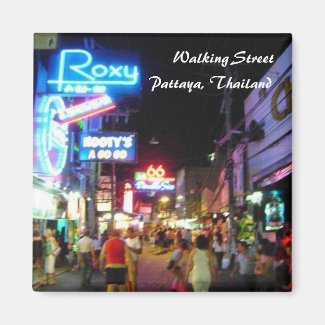
Despite efforts to diversify, Pattaya's go-go bars and neon-lit strip along Walking Street are as lively as ever.

The street gets its name from being closed to vehicular traffic every evening, transforming into a massive pedestrian party zone packed with restaurants, live music venues, nightclubs, and cabaret shows.

While food and drinks are amazingly cheap, it’s best practice to pay on an "as received" basis to avoid any tab confusion later in the night.

Crime against tourists is generally low and locals are welcoming, though minor disputes can occasionally arise simply due to language barriers.

Healthcare Facilities

According to the U.S. State Department, healthcare in Thailand is generally adequate, with modern facilities available for routine, long-term, and emergency care.

While Bangkok remains Thailand's primary hub for international medical tourism, Pattaya has developed a strong regional reputation for affordable, high-quality medical care of its own.

Key local facilities include:

  • Bangkok Hospital Pattaya

  • Pattaya International Hospital

  • Pattaya Memorial Hospital

  • Banglamung Hospital

Visa Requirements and Travel Safety

For American travelers planning a visit, entry requirements remain straightforward:

  • Visa-Free Entry: U.S. tourists staying under 30 days do not require a visa, provided they hold a passport with at least six months of remaining validity and proof of onward travel.

  • Travel Advisories: While the State Department issued a temporary travel alert during the political "Red Shirt" demonstrations in 2010, safety conditions have stabilized and warnings were lifted as security improved.

Be sure to check travel.state.gov for the latest official travel updates before booking your trip.

Monday, July 7, 2014

Does "The 90 Second Fitness Solution" Really Work? My 6-Month Review

Get rid of the leftover crap, focus on the meat of the workout, and get it over with in three minutes. Sounds good to me—but does it actually work?

It was a lazy morning on December 21, 2009. I was lying in bed, trying to motivate myself to take a jog around my Queens, New York neighborhood.

As usual, procrastination set in as excuses tossed around my head: "It's cold outside and I'll get pneumonia. I might step in dog poop. I don't feel like having a long conversation with the neighbor hanging out in the foyer."

I’m certainly not the gym type. I usually gain 10 pounds each winter and lose it again in the summer. During warmer months, I swim, bike, and run fairly regularly. The cold puts a crimp in my style, and I tend to blame Old Man Winter instead of myself.

As all of these reflections were running through my mind, something miraculous happened. WCBS2 News This Morning was on in the background. The chatter was low—just loud enough to mask my upstairs neighbor screaming into his cell phone.

All of a sudden, I snapped out of my daze when news anchors Kate Sullivan and Maurice DuBois started bantering about "The 90 Second Fitness Solution."

As someone who hates the gym, the comment immediately piqued my interest. Like a guard dog aroused by a knock on the door, I grabbed the remote and turned up the volume.

Sullivan and DuBois spoke of a miracle workout that took only 90 seconds to complete while still producing measurable results.

Damn, I thought. If I can't do that, then I'm a real fat ass!

As a skeptic by nature, I was far from convinced, but they had me for the segment. Sullivan highlighted a book called The 90 Second Fitness Solution by New York City trainer Pete Cerqua.

Cerqua was in the studio to discuss the routine, while goofy weather anchor John Elliott demonstrated the exercises.

The routine actually consists of two 90-second exercises, performed for a total of three minutes each day. Cerqua explained that the workout was effective because it enables you to "remove momentum, or all the motions that you don't need, and keep what you do need."

So far, so good. Focus on the meat of the workout and get it done in three minutes. Sounds like a plan!

First, Cerqua instructed Elliott to assume a pushup or "plank" position. Cerqua reasoned that anyone can do the workout, even if they can't manage a full pushup.

From there, it's pretty straightforward: hold the pushup position for a total of 90 seconds using a stopwatch for the countdown.

As Elliott assumed the position, Cerqua enthusiastically lectured: "Don't move, that's the key! Not moving works pretty much every muscle in your body. Triceps, shoulders, chest, back, glutes, hamstrings, abdominals—everybody feels this in their abs the next day."

After about 10 seconds, Elliott seemed to be struggling and stopped so they could move on to the next movement. I was skeptical but excited. Cerqua was in great shape—could I look that ripped with just three minutes of exercise a day?

The second part of the workout is essentially a static squat. Forget traditional squats with fast reps all the way to the floor; Cerqua’s version calls for a long, drawn-out isometric hold.

Elliott was told to squat down a bit and hold for 10 seconds, drop another inch for 10 more seconds, and repeat until completing the full cycle down and back up. Cerqua recommends five steps down and four steps up for a total of 90 seconds.

Seeing this, I thought, This looks pretty damn easy, but how is three minutes ever going to get me toned?

Well, here is a rundown of my progress.

I've been following The 90 Second Fitness Solution every day since December 21, 2009. Not to burst anyone's bubble, but this miracle workout is much harder than it sounds!

Although I did fine with the squats, holding a 90-second plank was brutal at first. After about 40 seconds, my arms were quivering like a cheap piece of Chinese spaghetti, and by 50 seconds, I would collapse.

Rather than beat myself up for failing to complete the full 90 seconds, I decided to adapt.

I kept the squat portion at the full 90 seconds and capped the plank at 40 seconds. After about two months, holding the plank for 40 seconds became completely comfortable.

Seeing clear progress, I kicked it up to 45 seconds. I'm still at 45 seconds, and it's steadily improving. Maybe in another month, I'll bump it up to 50 seconds.

Sometimes, if I really want to feel dedicated, I'll repeat the whole routine once in the morning and once before bed.

In the six months since starting The 90 Second Fitness Solution, I've noticed tangible results. My legs are much more toned and defined, my thighs are leaner, and the muscle definition is noticeable.

I can say the same for my arms. While I'm clearly no Arnold Schwarzenegger yet, my arms are more cut than they have ever been.

My main disappointment is that the routine hasn't done much for my abs. Most of my excess body fat is in my stomach area, which is the main spot I want to improve.

Cerqua claims the workout benefits all major muscle groups, and I don't disagree—I can certainly feel my core straining during the hold. However, I don't think this 3-minute routine alone is going to trim the waistline.

Maybe Cerqua needs to invent a dedicated 90-second stomach workout to complement the main routine?

Overall, I'm pleased with The 90 Second Fitness Solution and glad I stuck with it. It beats doing nothing, and while the results take time, there's nothing wrong with slowly getting diesel—90 seconds at a time!

Sunday, July 6, 2014

3 Cheap Manhattan Hotels: The Frugal Guide to Staying in Midtown NYC

While New York City is undoubtedly pricey, the notion that it's an unaffordable city to visit is completely wrong.

I laugh every time tourists tell me they save money by staying at hotels in New Jersey or Connecticut and taking the train into Manhattan. Staying in Manhattan is by far the best way to get the complete New York City experience.

Nothing against the other boroughs, but for a first-time tourist, Manhattan is where it's at.

The majority of major attractions are right here. It's the easiest borough to navigate as a newbie, and you can walk or take the subway just about anywhere else. Why spend hours commuting when you could be pounding the pavement and exploring?

Don't let the high-priced New York reputation fool you—there are hotel bargains to be found in Manhattan.

Plenty of economy-class chain hotels have sprung up over the past five years. Although they charge more than their suburban or airport counterparts, the central convenience they offer makes them a sensible investment. Not to mention the valuable time and aggravation you'll save!

Plus, there are lots of great independent hotels that are cheaper and packed with far more character than your run-of-the-mill Marriott, Hilton, or Westin.

Websites like Hotels.com and Travelocity.com will give you a good idea of what's out there. Be sure to narrow your search to Midtown and set a price cap of $200 per night.

See what pops up, keeping in mind that rates and availability fluctuate based on the season. As you search, keep an eye out for these three budget-friendly options. They are centrally located, uniquely New York, and won't break the bank.

1. The Hotel Pennsylvania

The Hotel Pennsylvania offers 1920s-style charm, affordability, and an incredible location.

Situated at 7th Avenue and 32nd Street, the hotel sits directly across from Madison Square Garden and Penn Station. For travelers unfamiliar with the city, you couldn't ask for a better spot—you are right in the middle of it all.

The immediate area gets a bit chaotic during the day, especially when swarms of commuters file into Penn Station for their evening ride home.

However, guests can easily walk to Times Square and Rockefeller Center, while Central Park, Chelsea, Union Square, and Greenwich Village are just a short subway or taxi ride away.

The neighborhood around Midtown South can feel a little seedy at night, but that's all part of the authentic NYC charm! Learn more about the Hotel Pennsylvania at www.hotelpenn.com.

2. The New Yorker Hotel

Located in the same neighborhood, the New Yorker Hotel is another solid choice that has earned a great reputation among frugal travelers.

Sitting at 8th Avenue and 34th Street, the New Yorker is the closest hotel to the Jacob K. Javits Convention Center, making it especially popular with business travelers attending trade shows.

The hotel's Art Deco architecture and grand lobby provide an enthusiastic welcome. Marble floors, gold-leaf doors, and soaring ceilings with chandeliers give the entrance a truly palatial feel.

While that grand atmosphere is mostly restricted to the lobby, the rooms are more than decent, and many offer incredible views.

The west side features unobstructed views of the Hudson River, while select rooms along 8th Avenue display breathtaking views of the Empire State Building. For details, visit www.newyorkerhotel.com.

3. The Carter Hotel

The Carter Hotel may not be pretty, but any property charging $99 a night in the heart of Times Square deserves a look. Intrigued yet? Read on!

The legendary Carter Hotel sits just west of Times Square at 250 West 43rd Street. Guests are greeted by a peculiar gold sign at the main entrance reading: "You wanted in Time Square & Less."

While you shouldn't judge a hotel purely by its quirky signage, it's certainly been a long time since the Carter's glory days.

Think of the Carter as the motor-inn equivalent of Midtown's hotel scene. That said, recent updates have made it tourist-worthy again, and the property has come a long way since the 1980s when the city paid the hotel to house the homeless.

You might have second thoughts after reading horrified customer reviews across various travel sites, but those rants should be taken in stride.

Bottom line: If you're high-maintenance, you probably won't enjoy the Carter. But if affordability, clean sheets, and a private bathroom are your primary requirements, it could be the perfect budget basecamp.

After all, you're coming to explore the city, not lounge around in your room all day! Check out www.carterhotel.com for current availability.

Whatever you do, don't buy into the myth that a visit to New York City requires five-star hotels and white-glove prices. With a little research, an affordable Manhattan getaway is well within reach!

Saturday, July 5, 2014

High Risk, High Reward: How to Invest in Vietnam’s Frontier Market

Still a communist country, Vietnam is making slow but steady progress toward a market-based economy.

Investing in Vietnam was all but impossible for everyday retail investors until recently. Ever since Goldman Sachs economist Jim O'Neill coined the acronym in 2001, BRIC countries (Brazil, Russia, India, and China) have been all the rage.

While these markets are far from mature, the 2008 financial crisis proved they are more closely aligned with Western economies than previously thought.

The Rise of Frontier Markets

Looking for investments with lower correlation to developed nations, many investors are turning to frontier markets.

Less liquid and more volatile than traditional emerging markets, frontier economies often carry higher political instability and unpredictability.

Still, for investors able to stomach the market shakiness, significant potential lies ahead.

Vietnam is a textbook example. Despite its communist government, the country continues to implement market-based reforms.

The Ho Chi Minh City Stock Exchange was established in 2000 and has grown substantially ever since.

Economic Resilience and Opportunity

According to the CIA World Factbook, Vietnam's per capita GDP reached $2,900 in 2009.

While many countries suffered negative growth during the global downturn, Vietnam's GDP expanded by an impressive 5.3%.

Low wages combined with increasing political stability make the country ripe for foreign investment.

How to Invest: The VanEck Vietnam ETF

Foreigners can purchase stock directly in Vietnam, but the administrative hassle isn't worth it for retail investors putting smaller sums to work.

In August 2009, VanEck Global launched a dedicated ETF to solve this problem.

Holding 32 securities with a net expense ratio of 0.99%, the Market Vectors Vietnam ETF (VNM) offers the easiest, most cost-effective way to gain exposure to the Vietnamese market by tracking the Market Vectors Vietnam Index.

The index targets companies that generate at least 50% of their revenues from Vietnam.

Because of this rule, only 68.6% of the portfolio companies are physically headquartered in Vietnam. The rest do a substantial portion of their business in the country while being based elsewhere.

Risks and Long-Term Outlook

While VNM has mostly traded sideways since its inception, it has generated significant investor interest.

By the end of Q1 2010, fund assets reached $131 million. At that time, VanEck estimated the fund's P/E ratio at 18.58 with a dividend yield of 2.41%.

Investors should take valuation metrics like P/E ratios and yields with a grain of salt. Extreme volatility is both common and expected in frontier markets.

However, those willing to roll with the punches could be rewarded over the long term.

If history is any guide, look to Asian Tigers like Thailand, Taiwan, and South Korea to see how rapidly an emerging economy can transform.

How to Invest in Frontier Markets: Cheap and Easy Diversification via ETFs

Less Developed Economies and Low Correlation Make Frontier Markets Attractive for Diversification

Emerging markets were all the rage until the 2008 financial crisis—when everything hit the fan.

Prior to 2008, investors drove emerging market P/E ratios to sky-high levels. After crashing and burning, those same markets caught a second wind and soared.

While long-term investors may still find emerging markets attractive, the days of snapping up shares for fire-sale prices have passed for now.

Looking Beyond Emerging Markets

Many investors who sold during the dark days of the financial crisis are now kicking themselves for missing out on the market's subsequent rally.

These investors may want to consider lesser-known frontier markets, generally described as a notch below emerging markets.

Frontier markets feature less developed economies and are often located in countries with considerable political uncertainty.

However, because frontier market economies rely less on financing from industrialized nations, they were generally less affected during the global economic downturn.

This lack of correlation with developed countries is a key attraction for investors seeking true portfolio diversification.

Still, anyone interested in frontier markets must be able to stomach frequent and extremely volatile swings in value.

How to Access Frontier Markets: ETF Options

Frontier market investing used to be nearly impossible for the average Joe. Today, several ETF options provide relatively cheap and convenient diversification.

The most prominent frontier market ETF is offered by Claymore: the Claymore/BNY Mellon Frontier MicroCap ETF (FRN), which tracks The Bank of New York Mellon New Frontier DR Index.

The index defines frontier market countries across several regions:

  • Middle East & Africa: Bahrain, Jordan, Kuwait, Lebanon, Oman, Qatar, UAE, Egypt, Ghana, Kenya, Malawi, Mauritius, Morocco, Nigeria, Tunisia, Zimbabwe

  • Eastern Europe & Asia: Bulgaria, Croatia, Czech Republic, Estonia, Georgia, Kazakhstan, Latvia, Lithuania, Poland, Romania, Slovak Republic, Slovenia, Ukraine, Bangladesh, Pakistan, Papua New Guinea, Sri Lanka, Vietnam

  • Americas: Peru, Chile, Colombia, Ecuador, Jamaica, Panama, Trinidad & Tobago

Criticisms of the Index

The BNY Mellon Index has drawn criticism for being too "emerging" and not enough "frontier," as several included countries are solidly middle-income.

Additionally, the fund is top-heavy. Approximately 64% of its assets are concentrated in just four countries: Chile, Egypt, Colombia, and Poland.

Despite these drawbacks, the ETF still provides broad asset allocation for a reasonable 0.65% expense ratio.

Who Should (and Shouldn't) Invest?

Frontier markets are certainly not appropriate for everyone.

Companies in these markets are usually in their early growth stages, meaning profits are typically reinvested back into the business rather than paid out as dividends. Investors seeking steady income should look elsewhere.

Before jumping in, it is best to make a firm, long-term commitment. Investors who can ride out short-term storms will fare better over time.

If you cannot stomach price swings of 20% or more, look for a safer place to stash your money.

Smart Execution: Dollar-Cost Averaging & Brokerage Costs

Potential investors should consider staggering their entry to take advantage of dollar-cost averaging.

While dollar-cost averaging isn't always recommended for ETFs due to trading fees, making four quarterly investments instead of buying all at once can be worth it to spread out your market risk.

When purchasing shares, use a discount brokerage like Charles Schwab or Fidelity to keep commission costs low. Full-service brokerages can charge significantly more for the exact same transaction.

Other Frontier Market ETFs to Consider

  • PowerShares MENA Frontier Countries (PMNA)

  • Market Vectors Africa Index (AFK)

  • Market Vectors Vietnam (VNM)

  • Market Vectors Gulf States (MES)

Beyond the Corporate Label: Discovering the Best Starbucks Coffee Shops in New York City

Beyond the Corporate Label: Discovering the Best Starbucks Coffee Shops in New York City

Some people love to decry the Starbucks experience as generic or corporate.

These naysayers don't realize that every Starbucks coffee shop has its own unique identity—although some locations are much more intriguing to visit than others.

There are hundreds of Starbucks coffee shops across New York City, and each one is distinctive and special in its own way.

The Locations to Skip: Commuter and Financial Hubs

Certain Starbucks coffee shops don't have much of a local scene. Hands down, they are not good places to hang out. Avoid them unless you just want to grab a Frappuccino and be on your way.

Boring Starbucks shops can be found in commuter-heavy locations such as Pennsylvania Station or Grand Central Terminal. Generally, these stores aren't very stimulating and lack any real neighborhood feel.

Similarly, Starbucks locations in the Financial District or certain commercial parts of Midtown Manhattan can feel desolate on weekends or outside of rush hour. These shops don't have a strong connection to their community because nobody is there interacting.

Corporate warriors dip in to grab a quick latte during their hectic workday, but people rarely spend quality time there. This leads to a cold, empty, and uninviting atmosphere.

The Residential Refuge and Public Workspace

If you want the real Starbucks experience, choose a shop located in a vibrant residential neighborhood.

Everyone knows that New York City apartments are punishingly small. Sometimes, city dwellers just need to escape that confined space for a little bit.

Maybe they can't stand their annoying roommate, the neighbors are maddeningly loud, or the air conditioning is broken and it's 110 degrees inside. Starbucks provides the perfect refuge.

Since New York City houses a huge population of writers, artists, and freelancers of every type, Starbucks also serves as a de facto community office for the masses.

It is the ideal spot to hold meetings, bust out a chapter of a novel, read the newspaper, or simply draw inspiration from the creative energy around you.

#1: Union Square West (17th Street & Broadway)

The best Starbucks of all time is located in New York's Union Square neighborhood. Don't be confused, though—there are two Starbucks coffee shops in Union Square.

The better location sits at 17th Street and Broadway, right on the corner of Union Square West. It is spacious, featuring both a front and back room with plenty of tables and ample outlets for laptop users.

Union Square Park is right across the street and serves as the heart of the neighborhood. The park is a popular hangout spot during warm weather, featuring a greenmarket on weekend mornings and local artists selling paintings and crafts.

Nearby institutions like The New School and New York University add another creative element to the already eclectic crowd.

The interior of this building is exceptionally unique. Large windows, high ceilings, handsome molding, and old-style mosaic flooring give the space a classic 1930s feel.

This location attracts a diverse mix of students, actors, creatives, a few tourists, and plenty of skateboarders from the park across the street.

Note: This Starbucks is generally quite loud and can get a bit rowdy late at night.

#2: Upper West Side (63rd Street & Broadway)

The second best Starbucks in New York City is on 63rd Street and Broadway, right near Lincoln Center.

The crowd here is vastly different from Union Square. The clientele is generally older, more subdued, and conservative in their behavior. Most customers are restrained Upper West Siders who come to read, write, or conduct quiet meetings.

Students from the nearby Juilliard School also frequent this location, tending to use it as a glorified study hall. Because this shop is close to Midtown and adjacent to Lincoln Center for the Performing Arts, a fair number of tourists wander in as well.

Still, the scene is generally calmer and less boisterous than other locations around the city.

Be aware that this Starbucks can get extremely busy before or after events at Lincoln Center—home of The Metropolitan Opera, The New York City Ballet, and The New York Philharmonic.

However, it makes for a fantastic people-watching spot to observe theatergoers dressed up in tuxedos and gowns.

#3: East Village Fringe (51 Astor Place)

The third best Starbucks in New York City sits at 51 Astor Place. Located near 8th Street (St. Mark's Place) and Cooper Square, this vibrant area is named for John Jacob Astor and sits right on the fringes of the East Village, Union Square, and Greenwich Village.

Students and hipsters in their late twenties and early thirties comprise the primary clientele here. Nearby schools like Cooper Union, NYU, and The New School supply a steady stream of students using the coffee shop as a modified library.

This location also catches the creative spillover from the East Village just an avenue away. The East Village remains one of Manhattan's classic artistic enclaves, home to aspiring actors, writers, photographers, designers, and filmmakers.

Oftentimes, these creatives make up the mid-afternoon rush—stopping in for a caffeine jolt after rolling out of bed before heading off to wait tables around the city.

This store is exceptionally large, boasting numerous tables and a few cushy armchairs. The music here always seems a bit louder than at other Starbucks establishments.

While the building is historic, it features added sunrooms on two sides. These sunrooms are amazing for people-watching, reading, or meeting friends.

Note: The sunrooms are not ideal for laptop work, as the daylight glare on screen displays can be very strong.

Discovering Your Own Neighborhood Spot

While Starbucks' corporate headquarters may be in Seattle, New York City feels like the chain's second home, with coffee shops on almost every major corner.

Undoubtedly, there are scores of unique Starbucks across the five boroughs, but this guide highlights three of the very best to visit.

Remember, while the image of the twin-tailed siren graces every storefront, each coffee house has its own individual spirit.

Stepping into one isn't just about grabbing a cup of coffee—it's an opportunity to explore a new neighborhood and connect with the people who make it unique.