Saturday, October 21, 2023

Jerry John Rawlings: From Revolutionary to Democratic Leader

Portrait of former Ghanaian President Jerry John Rawlings in his later years, featuring grey hair and beard, wire-rimmed glasses, and a traditional tunic.
Statesman, reformer, and architect of Ghana's Fourth Republic—Jerry John Rawlings

Jerry John Rawlings remains one of the most influential and defining figures in modern African history. A Ghanaian military officer, aviator, and politician, Rawlings led Ghana briefly in 1979 and continuously from 1981 to 2001. Over his two decades at the helm, he spearheaded a complex transition from military governance to a thriving multi-party democracy, earning a reputation as a fierce anti-corruption crusader who established economic and political stability in Ghana.

Early Life, Education, and Family

Born Jerry Rawlings John on June 22, 1947, in Accra, Ghana, he was the son of Victoria Agbotui, a Ghanaian native from Dzelukope, and James Ramsey John, a Scottish chemist. His name was later transposed to "Jerry John Rawlings" due to a clerical enlistment error when he joined the military.

Rawlings attended the prestigious Achimota School, where he developed a passion for music and aviation while meeting his future wife, Nana Konadu Agyeman. After completing high school, he enlisted in the Ghana Air Force in 1967, training at the military academy in Teshie. He was commissioned as a Flight Lieutenant in 1978, establishing himself as a skilled pilot and a popular figure among the enlisted ranks.

Together, Jerry and Nana Konadu built a prominent political dynamic. The couple raised four children: three daughters—Zanetor, Yaa Asantewaa, and Amina—and one son, Kimathi. Their eldest daughter, Zanetor Rawlings, would later follow in her father’s political footsteps as a Member of Parliament.

The Rise to Power: 1979 and 1981

Rawlings entered the national spotlight during a period of severe economic hardship and widespread political corruption in Ghana. Disillusioned by the military regime at the time, he led a short-lived coup attempt in May 1979. Though initially arrested, he was freed by junior military officers on June 4, 1979, launching a successful uprising that established the Armed Forces Revolutionary Council (AFRC).

During his brief 112-day tenure in 1979, Rawlings initiated a purge of high-level government corruption before upholding his promise to hand power over to a democratically elected civilian government headed by President Hilla Limann.

However, as economic stagnation resumed under Limann’s leadership, Rawlings returned to power on December 31, 1981, forming the Provisional National Defence Council (PNDC). This second period marked the start of his 20-year governance.

Economic Stabilization and Democratic Reform

Rawlings’ second era in power transformed Ghana's socio-economic landscape:

  • Economic Recovery Program (ERP): In the mid-1980s, Rawlings adopted pragmatic market-oriented reforms in collaboration with the World Bank and International Monetary Fund (IMF), curbing inflation, revitalizing infrastructure, and encouraging foreign investment.

  • Transition to Democracy: In 1992, Rawlings led the drafting of a new constitution, legalizing political parties and establishing Ghana’s Fourth Republic. He founded the National Democratic Congress (NDC) and won democratic presidential elections in 1992 and 1996.

  • Smooth Transfer of Power: Upon completing his constitutional two-term limit in 2001, Rawlings peacefully stepped down, handing power to opposition leader John Kufuor—setting a precedent for democratic handovers in West Africa.

Passing and Legacy

Jerry John Rawlings passed away on November 12, 2020, at the age of 73 following a brief illness. He was honored with a full state funeral in Accra, attended by heads of state from across Africa and world leaders who paid tribute to his role in shaping modern Ghana.

Today, Rawlings is remembered as a charismatic leader whose legacy—marked by anti-corruption, grassroots empowerment, and constitutional democracy—continues to influence African politics.


Friday, August 18, 2023

Bitcoin, Tourism, and Transformation: The Nayib Bukele Era in El Salvador

Official portrait of El Salvador President Nayib Bukele wearing the presidential sash.
The leader reshaping El Salvador: President Nayib Bukele in official regalia.

Nayib Armando Bukele Ortez is the 43rd president of El Salvador and the first leader since José Napoleón Duarte (1984–1989) elected outside the nation's traditional two-party system. Before taking office, he broke away from the dominance of the left-leaning Farabundo Martí National Liberation Front (FMLN) and the right-leaning Nationalist Republican Alliance (ARENA), establishing a new political standard in the country.

Bukele built his political career in local government, serving three years as mayor of Nuevo Cuscatlán (2012–2015) before taking office as mayor of San Salvador, the nation's capital, from 2015 to 2018.

On the international stage, Bukele gained widespread attention on June 5, 2021, when he announced plans to introduce a bill making Bitcoin legal tender in El Salvador. Just three days later, on June 8, the Legislative Assembly passed the landmark legislation, making El Salvador the first country in the world to adopt the cryptocurrency officially.

With local crime significantly reduced under his administration, Bukele has shifted focus toward boosting international tourism. His policy initiatives and security push have drawn a steady influx of first-time visitors to El Salvador, ranging from Bitcoin enthusiasts and surfers to anglers and eco-tourists.

Friday, June 9, 2023

The Perfect New England Road Trip: Why Portsmouth, NH Should Be Your Next Escape

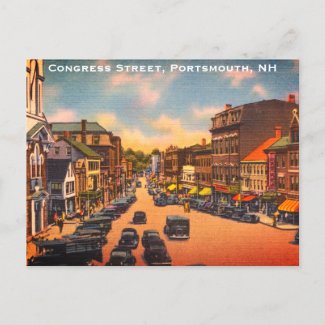
Vintage postcard of Congress Street in downtown Portsmouth, New Hampshire, showing classic brick commercial buildings, storefront awnings, vintage automobiles parked along the curb, and pedestrians on the sidewalk.
A step back in time on Congress Street. Downtown Portsmouth’s charm is truly timeless.

International travel ground to a halt during the global Coronavirus pandemic. As a result, many travelers rediscovered rich destinations much closer to home. Nestled along the Piscataqua River, Portsmouth, New Hampshire, stands out as a prime getaway—offering an easy drive from New York City and a short trip just up the road from Boston.

A historic and charming coastal destination, Portsmouth delivers a refreshing dose of New England hospitality. Downtown Portsmouth is exceptionally walkable, centered around Market Square and a historic district with roots dating back to the 1600s. 

Cobblestone pathways, tree-lined streets, and preserved Colonial-era buildings define the cityscape, reflecting Portsmouth's storied past as a major American seaport and shipbuilding hub. A short stroll leads to Strawberry Banke, a outdoor museum where centuries of original architecture bring early American history to life.

Beyond its historical footprint, Portsmouth has evolved into a vibrant regional hub for foodies and shoppers alike. The city is widely recognized for its eclectic restaurant scene, bustling independent coffee shops, microbreweries, and waterfront seafood spots. 

Visitors can wander through local boutiques, galleries, and specialty shops while taking full advantage of New Hampshire's lack of sales tax—making it an appealing destination to stock up on everything from handmade goods to high-end items.

Whether you are exploring living history, enjoying a craft pint by the harbor, or taking a scenic cruise, Portsmouth offers a seamless blend of classic heritage and modern culture.

Thursday, August 11, 2016

Scooters in Italy Source Of Concern For American Tourist

I love traveling in Italy, but I’m generally on the cautious side when it comes to getting around. My preferred mode of transportation is my own two feet, closely followed by public transit like buses and subways. I typically try to avoid taxis, though rideshares like Uber have made hailing a ride a bit more predictable.

On a trip to Italy last year, I was traveling with a group of first-time visitors who were hell-bent on renting scooters. We were in Naples—a city I had visited several times before. 

Now, scooters are undeniably part of the romanticized Italian aesthetic, woven into the cultural fabric of the country right alongside espresso and historic piazzas.

However, I genuinely despise scooters. They are inherently risky, and renting one in an unfamiliar, high-traffic European metropolis is a recipe for disaster. Naples is not some laid-back, slow-paced island destination where you casually coast down quiet coastal roads. It’s a dense, pulsating urban maze where local riders aggressively dart into any gap wide enough for a front wheel.

Road rage and impossibly tight squeezes are standard operating procedure on Neapolitan streets. Even if you have years of riding experience back home, put your pride aside and explore Naples on foot or by metro. 

And if you’ve never driven a scooter in your life and plan on using the chaotic streets of Naples as your proving ground—give yourself a swift reality check before you step onto the pavement.

Wednesday, August 10, 2016

Helsinki to St. Petersburg: Exploring the Historic Cross-Border Connection

Helsinki, Finland, and St. Petersburg, Russia, have long maintained a complex and uneasy dynamic as neighboring powers. However, following the fall of the Soviet Union, the relationship began to warm substantially as cross-border trade, tourism, and mutual investment rapidly expanded.

Despite recurring diplomatic friction between Western Europe and Moscow, the physical journey between the two cities remained remarkably accessible and popular among citizens of both nations. 

While the nearly five-hour drive across the border was a staple for motorists, the introduction of the high-speed Allegro train revolutionized travel, cutting the trip to a comfortable three and a half hours.

At the ground level, macro-economic disputes often took a backseat to daily practicalities. Everyday Finns regularly crossed the border to stock up on cheaper consumer goods and fuel, while Russians frequently traveled into Helsinki to access specialized Finnish medical care, high-end shopping, and European transit hubs. For years, this pragmatic cross-border flow bridged the divide between two very different worlds.


Sunday, August 7, 2016

I Thought Killington Was Just for Skiing—Until I Saw This Golf Course

When it comes to East Coast skiing, Killington isn’t afraid to throw its weight around. Much of the resort’s advertising and promotional literature relentlessly leans into its long-held nickname: "The Beast of the East."

Until recently, I’d only ever visited Killington in its natural state—blanketed in thick winter snow. Heading up to Killington, Vermont, for a mid-July vacation felt about as natural as sipping frozen margaritas on a sub-zero January night.

Then, one day, everything changed. While scrolling through my feed, a friend’s photo of Green Mountain National Golf Course caught my eye. The lush, fairways looked less like a standard golf course and more like a slice of mountain paradise.

It was stunning, expansive, and surprisingly uncrowded. Without boring you with all the fine print: Killington is in serious contention for the ultimate New England summer golf trip. The mountain offers incredible amenities, pristine course conditions, and an unbeatable value compared to traditional golf resorts.

While taking in the view of Killington Peak without its signature snowpack will always feel a bit surreal, trading in ski poles for golf clubs—and topping off a round with a cold craft beer—has officially become my new summer tradition.

Wednesday, August 3, 2016

Relics, Trams, and Cheap Rent: Why Leipzig Is My Favorite East German Escape

People call me crazy, but I’ve always wished I could have visited the Soviet Union before it collapsed. Don't get me wrong—I didn't admire the oppressive system or wish to live under communist rule; I just think experiencing life behind the Iron Curtain firsthand would have been fascinating.

Fortunately, my travel and work have allowed me to explore several former Soviet Republics and Eastern Bloc satellite states. In particular, business frequently takes me to Leipzig, Germany—a key historic hub of the former German Democratic Republic (DDR).

While the economy of former East Germany has largely caught up with its western counterparts, physical remnants of its communist past still peak through the modern landscape. Looking out the window of a Leipzig tram, scenes of urban industrial grit are common. 

Weathered facades and abandoned, graffiti-strewn factories bear a striking resemblance to the Rust Belt cities of the American Midwest.

Yet, time has marched steadily forward. Over the last decade, Leipzig has reinvented itself—earning a widespread reputation as one of Europe's premier havens for artists, musicians, and creatives drawn by affordable rent and expansive studio spaces.

Beyond its artistic revival, Leipzig's best operational feature is its sheer walkability. Paired with a comprehensive tram network and a deeply embedded cycling culture, owning a car here feels like an unnecessary burden rather than a convenience. 

Vibrant local dining, lively bars, and a legendary classical and contemporary music scene offer endless reasons to visit. (And for those seeking familiar comforts, there's even a Starbucks in the central square).

For me, exploring Leipzig feels like stepping through layers of history. It's a privilege to wander the streets and learn about the storied past of an intellectual and creative powerhouse—a city whose thinkers, composers, and citizens have made enduring cultural contributions to the world.